
January 2010
The Economic Times: We don’t see paintings, we hear stories – Kito de Boer
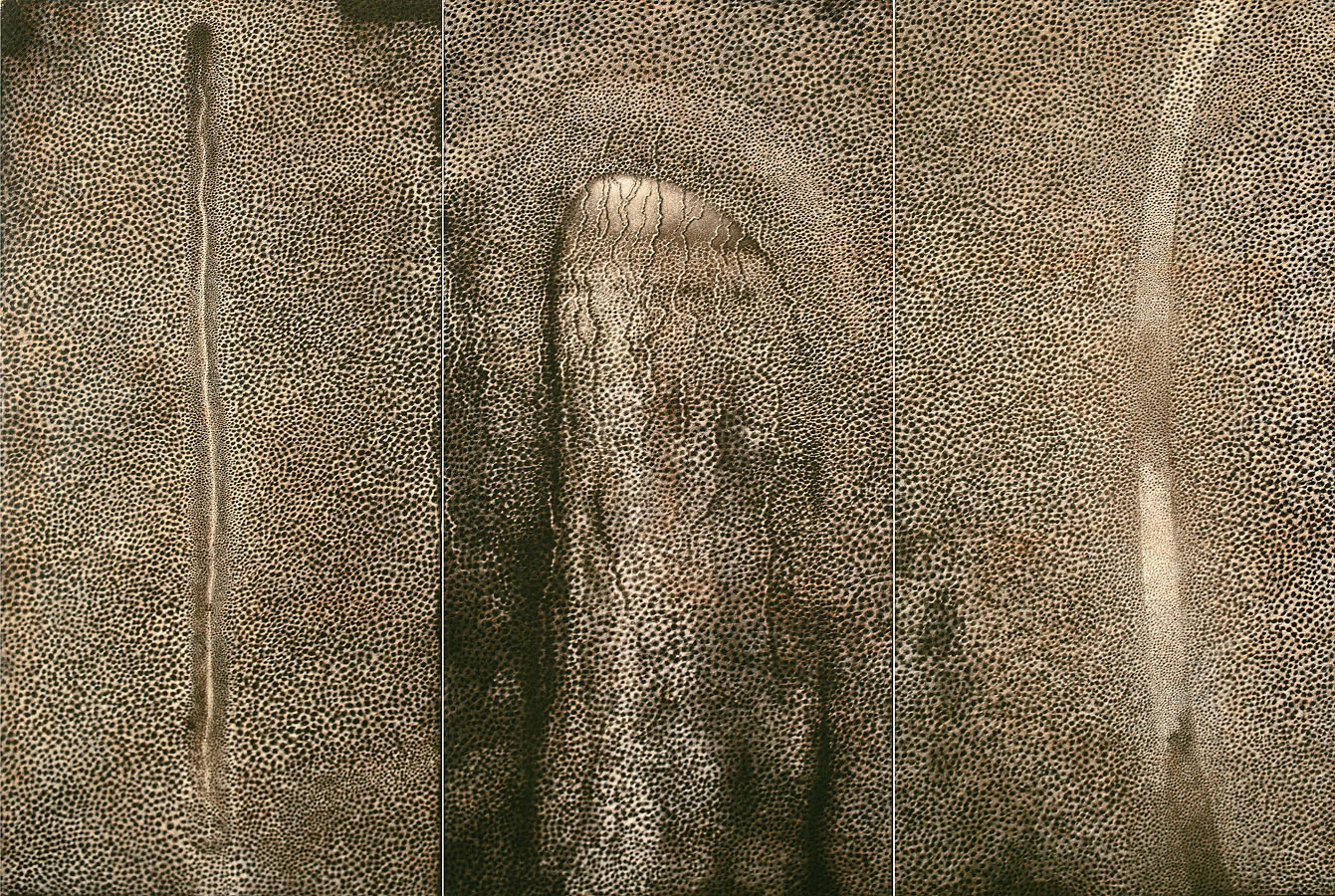
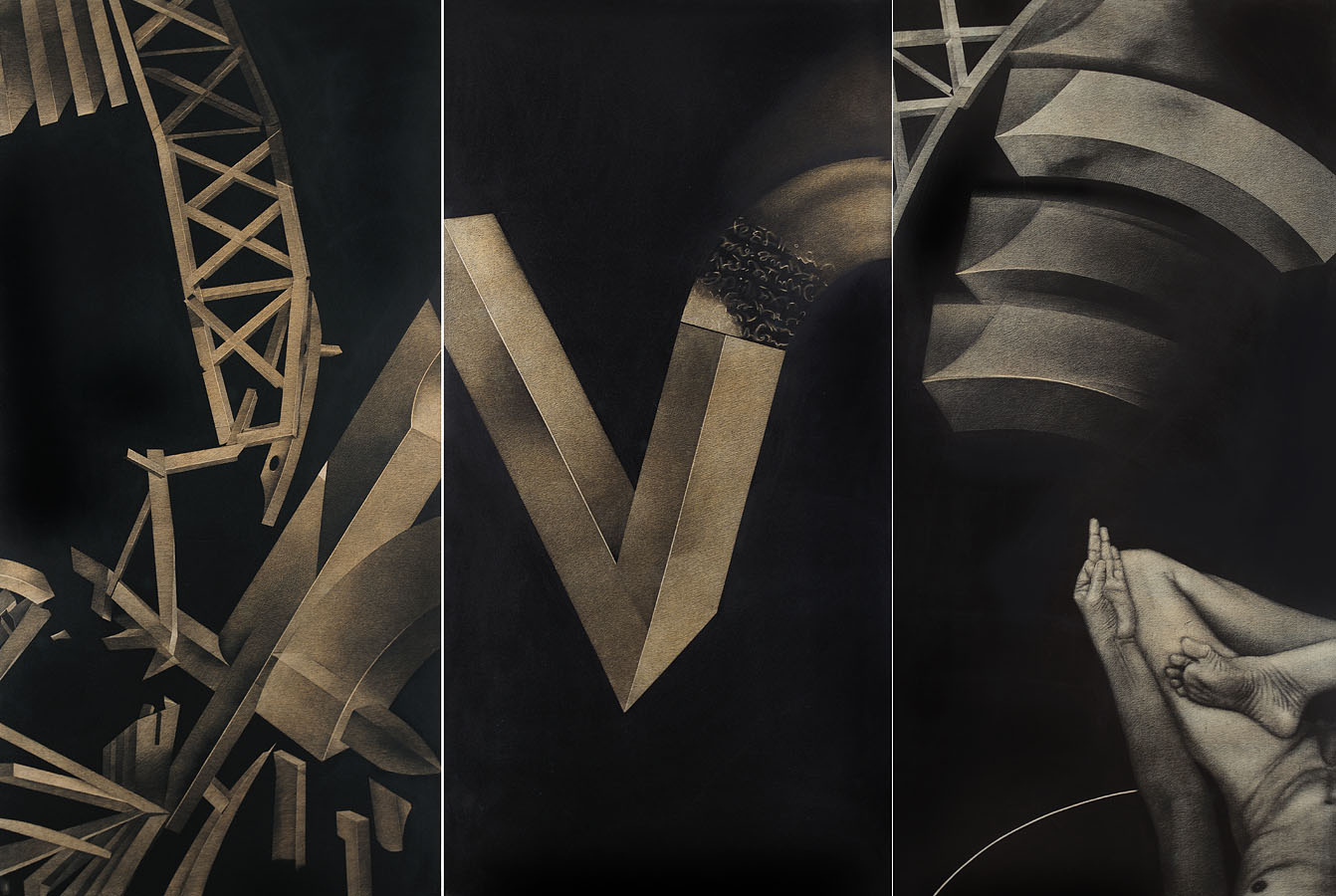
The moment you run out of wall space and yet continue to acquire, is the time to admit that obsession has become addiction. The purchase that marked this shift was Rameshwar Broota's triptych Traces of Man. It is an exceptional painting in terms of execution and universal vision. It is a black, brooding, abstract work created carefully and slowly by scraping away layers of paint with a razor blade. The first time we stood in front of this great work, we immediately knew we couldn't leave without it. The commitment of the artist to his vision had created one of his greatest works. Broota's passion and originality radiated from every inch.
June 2009
In Step with the Tortoise – Keshav Malik
Before I begin to ramble about Rameshwar Broota’s world one thing must be said at the very start, namely, that his art is not built upon a ‘great’ idea, but upon a minute, conscientious realisation, upon the attainable, upon a craft. And this, if I may say so, is a compliment, not the reverse. It is at as it were he has very naturally pledged himself to an humble seeming but difficult beauty of form, one that he could oversee, summon and direct. Only so did this beauty, that of dynamic form, deign to come, that is when everything was prepared. It is for this reason the stark simplicity of his maturest compositions, with not an iota of the eye-hurting alien detail sticking to them. It is how in the eighties and nineties his most individualized work began. By this time all received or routine wisdom of art had become of little use to him. The nick blade technics he had invented for himself were increasingly directed to, and brought forward, an astonishing feel of aliveness to his compositions, and as is surely matchless. As far as his art was concerned the man had become the master of himself.
January 2009
Counterparts: Recent works – by Roobina Karode
One encounters an unusual visual image with a human hand jutting out from a hollow pipe. Part flesh part metal, part human, part industrial, Rameshwar Broota’s recent paintings push forward the discourse on transgressive representations of the human body. One is made to encounter the unfamiliar psychological terrain through corporeal fusion, forcing us to reimagine the body’s boundaries in ways that may or may not be pleasant. Like a story without conclusions, Broota’s imagery stimulates many questions.
July 2007
Interview with Kamala Kapoor
Listening to Broota speak, I thought I had acquired a fair mental sketch of his defining characteristics: much like his deeply felt and intensely conceived works, the artist seemed of a serious bent of mind, his words bespeaking an insistence on the particular and the authentic.
February 2007
In the First Person: Photography as Self Introspection – by Shukla Savant
One by one images flicker and roll over on the Macintosh screen in no particularly connected fashion. A tranquil seascape all of a sudden gives way to a series of marble images of Greek kuros, perfect in their athletic body, reveling in their nakedness. Suddenly the screen lights up with an image of a Venus pudica concealing her genetilia and her breasts with her languid arms. Across the computer screen on the wall of the small intimate studio, in a stark black and white photographic image, one sees a fragile naked male body echo the gesture of concealment, with deeply veined hands covered with hair; each sinewy blood vessel standing out in sharp contrast against the pale skin. It is an uncanny moment of reflective connection, for no mirror intervenes yet the two images are clearly interconnected.
June 2005
Edge of the Precipice: The Art of Rameshwar Broota – by Gayatri Sinha
Most artists commit themselves to the enduring challenge of drawing from the imagination. Rameshwar Broota continually revises the way he looks at man himself. In a career spanning four decades Broota has moved from images of existential anxiety to sharp satire to a classic heroism, which settles tantalizingly close to the edge of hope and despair. In the process he compels a revision of the notion of the heroic to embrace, rather than exclude, the ordinary.