PtG

About PtG

This author has not yet filled in any details.
So far PtG has created 44 blog entries.

The Hindu: Capturing the Man-nature Relationship Through Lens

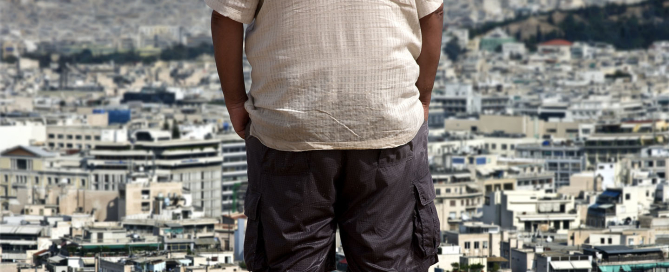
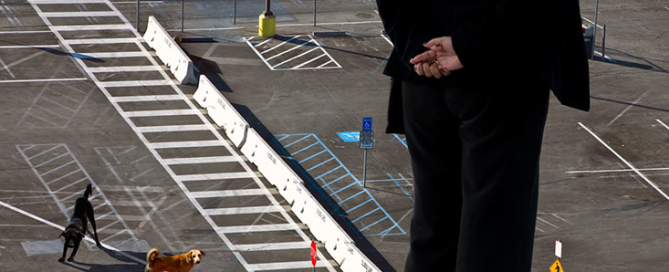
Veteran artist Rameshwar Broota explores the relationship between human beings and nature in his ongoing exhibition at Vadehra Art Gallery in Okhla Phase I here. The 69-year-old artist has tried to give every minute detail in his intricately textured pictures. Broota's metamorphosis into a photographer is bound to be another lesson in art history for artists who study under him at the Triveni Kala Sangam. He has been Head of the Department at Triveni since 1967.
2023-05-25T15:44:38+00:00March 9th, 2011|Categories: Media|Tags: , , , |

This End to the Other – Exhibition of Photographs

Veteran artist Rameshwar Broota returns with a new series of photographs collected and developed in his own unique technique, over a period of four years. The exhibition titled “This End to the Other" will be on view at Triveni Kala Sangam from 13th to 21st February and thereafter at Vadehra Art Gallery in Okhla from 6th to 13th March.

2023-05-25T15:44:38+00:00February 7th, 2011|Categories: News|Tags: , |

Hindustan Times: The Broota Blow-up

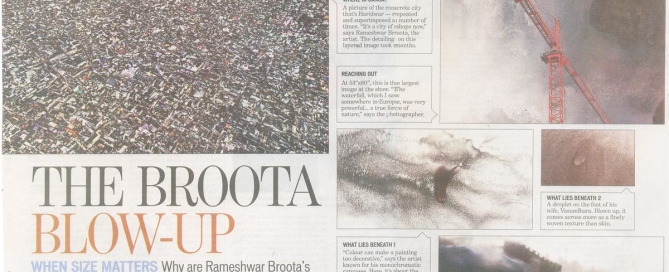
Rameshwar Broota likes to work on large canvases. “I like the action,” says the 70-year-old artist, swinging an imaginary brush in the air. “When I scrape paint for the details, greater-than-lifesize gets more accuracy... When you magnify, so many things are added and subtracted.” This ‘addition and subtraction’ continues in his photography, too. In this case, his canvas is a 32-inch MacPro screen. Broota takes an image or a set of images at very high resolutions, and then spends night after night working with them on the Photoshop software — altering, superimposing, enhancing — to get the composition he wants. And he prints them at sizes of at least 40”x60” — monumental for photos.

2023-05-25T15:44:38+00:00February 5th, 2011|Categories: Media|Tags: , , |

TOI-The Crest Edition: From Blade to Computer

Photography, it was said, would kill painting. But what happens when an artist starts painting photographs? Not with brush and colour but camera and MacBook Pro. For the last one year, Delhi artist Rameshwar Broota has traded the easel for pixels. “I stopped using the brush in the ’80s and turned to the blade,” he says. His technique of applying several coats of paint and then scratching out figures with a blade earned him the epithet of Blade Runner. But of late, he’s been burning the midnight oil in front of his 30-inch computer screen, turning photographs into images that are nothing like the ones he clicked.

2023-05-25T15:44:38+00:00February 5th, 2011|Categories: Media|Tags: , , |

This End to the Other – by Roobina Karode

Rameshwar Broota’s recent photographs reflect both a contemporary emphasis on the interiority of vision and translate the personal relationship between the photographer and subject in many ways that appear at once spontaneous and yet are shaped with extraordinary care.

2023-05-25T15:44:38+00:00February 2nd, 2011|Categories: Reviews|Tags: |

Indian Express: The Big Picture

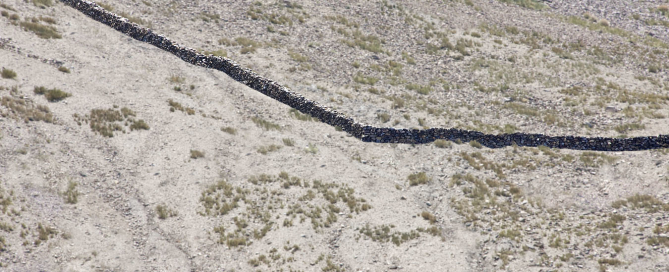
In Rameshwar Broota’s office-cum-studio at Delhi’s Triveni Kala Sangam, a 32-inch MacPro glows softly in the morning light. It’s the machine on which the 70-year-old artist has produced his latest work — photographs taken over a period of five years, in vastly different places: from Greece to Turkey; from the barren wasteland of Spiti to the crowded streets of Haridwar. They are intricately detailed images, but blown up to a massive scale, and part of the exhibition “Open Enclosures” on at Shridharani Art Gallery in Delhi.

2023-05-25T15:44:38+00:00January 20th, 2011|Categories: Media|Tags: , , |

The Economic Times: We don’t see paintings, we hear stories – Kito de Boer

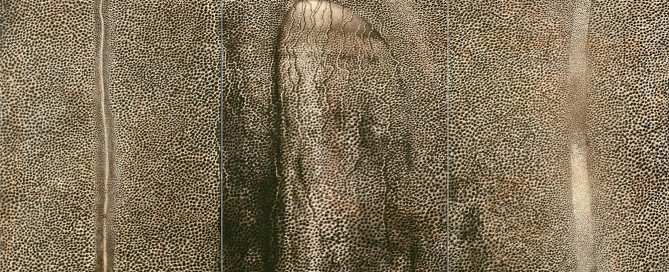
The moment you run out of wall space and yet continue to acquire, is the time to admit that obsession has become addiction. The purchase that marked this shift was Rameshwar Broota's triptych Traces of Man. It is an exceptional painting in terms of execution and universal vision. It is a black, brooding, abstract work created carefully and slowly by scraping away layers of paint with a razor blade. The first time we stood in front of this great work, we immediately knew we couldn't leave without it. The commitment of the artist to his vision had created one of his greatest works. Broota's passion and originality radiated from every inch.

2023-05-25T15:44:38+00:00January 24th, 2010|Categories: Media|Tags: , |

In Step with the Tortoise – Keshav Malik

Before I begin to ramble about Rameshwar Broota’s world one thing must be said at the very start, namely, that his art is not built upon a ‘great’ idea, but upon a minute, conscientious realisation, upon the attainable, upon a craft. And this, if I may say so, is a compliment, not the reverse. It is at as it were he has very naturally pledged himself to an humble seeming but difficult beauty of form, one that he could oversee, summon and direct. Only so did this beauty, that of dynamic form, deign to come, that is when everything was prepared. It is for this reason the stark simplicity of his maturest compositions, with not an iota of the eye-hurting alien detail sticking to them. It is how in the eighties and nineties his most individualized work began. By this time all received or routine wisdom of art had become of little use to him. The nick blade technics he had invented for himself were increasingly directed to, and brought forward, an astonishing feel of aliveness to his compositions, and as is surely matchless. As far as his art was concerned the man had become the master of himself.

2023-05-25T15:44:38+00:00June 11th, 2009|Categories: Reviews|Tags: |

Counterparts: Recent works – by Roobina Karode

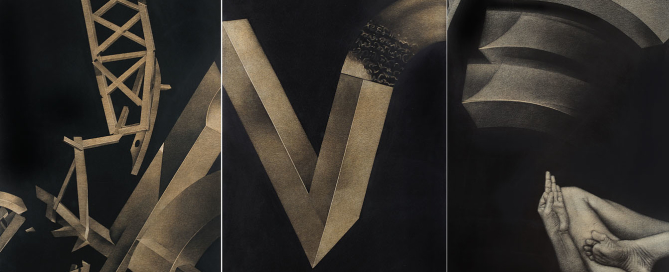
One encounters an unusual visual image with a human hand jutting out from a hollow pipe. Part flesh part metal, part human, part industrial, Rameshwar Broota’s recent paintings push forward the discourse on transgressive representations of the human body. One is made to encounter the unfamiliar psychological terrain through corporeal fusion, forcing us to reimagine the body’s boundaries in ways that may or may not be pleasant. Like a story without conclusions, Broota’s imagery stimulates many questions.

2023-05-25T15:44:38+00:00January 17th, 2009|Categories: Reviews|Tags: |
Go to Top